
A Mediterranean Dip Meant for Sharing
Legend has it that this smoky eggplant dip was first made by a devoted son who mashed roasted eggplant into a soft puree to feed his toothless father.
Whether or not the story is true, one thing is certain: Baba Ganoush is irresistibly delicious.
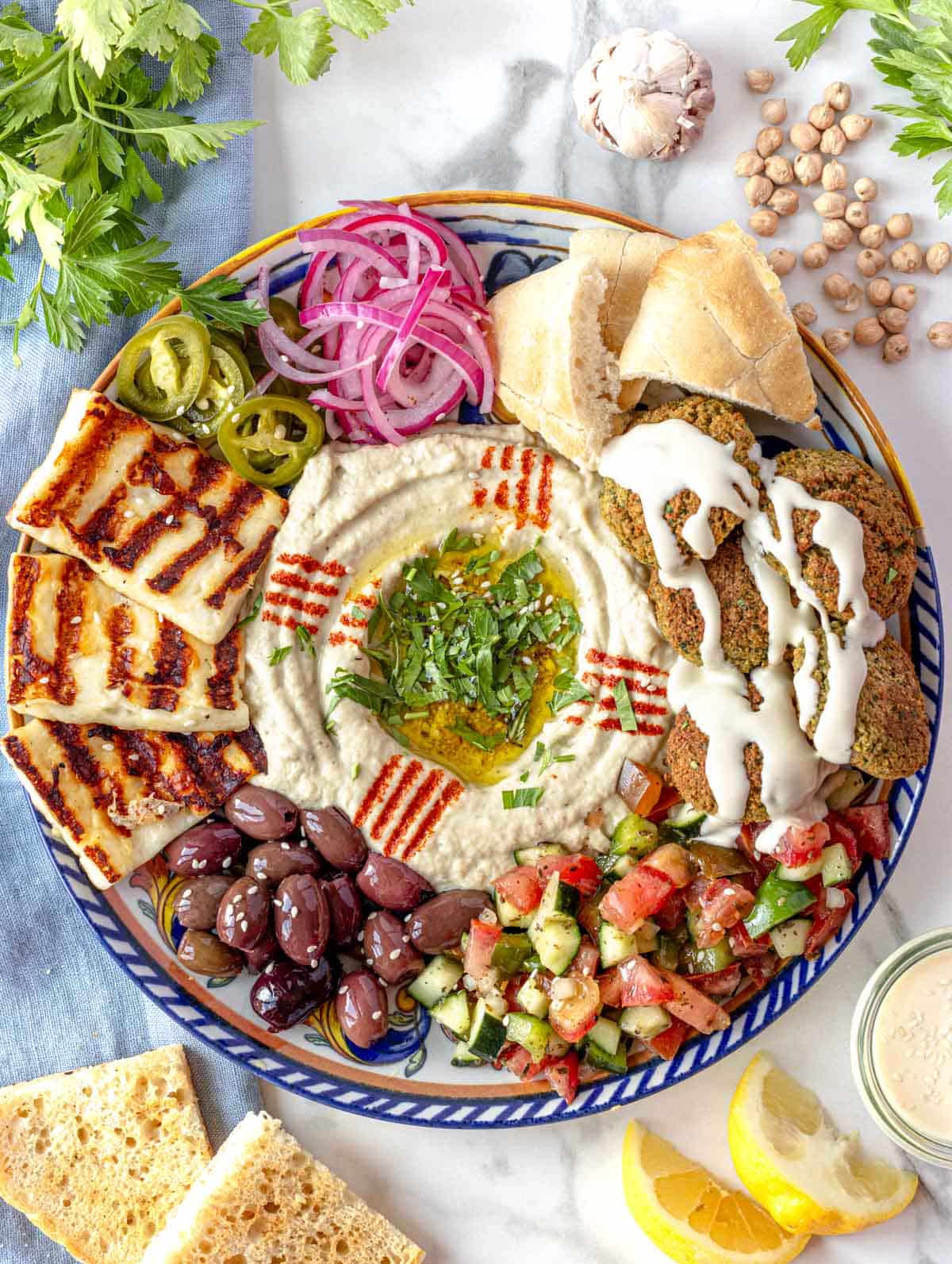
Louise and I make it often when eggplants are in season. Like many Mediterranean recipes, it’s meant to be shared—usually as part of a colorful meze platter with hummus, muhammara, tabouli salad, and warm pita bread.
The dip’s signature smoky flavor comes from grilling whole eggplants over an open flame until the skin is charred and blistered. The aroma of grilled eggplant filling the kitchen is pure magic.
And it’s not just delicious—it’s naturally low in calories, rich in fiber, and full of anti-inflammatory ingredients, making it a perfect choice for heart-healthy eating.
If you’re short on time, the air fryer or the oven work too. It’s a bit less smoky, but still incredibly tasty.
Ingredients
Full ingredients and substitutions are in the recipe box below.
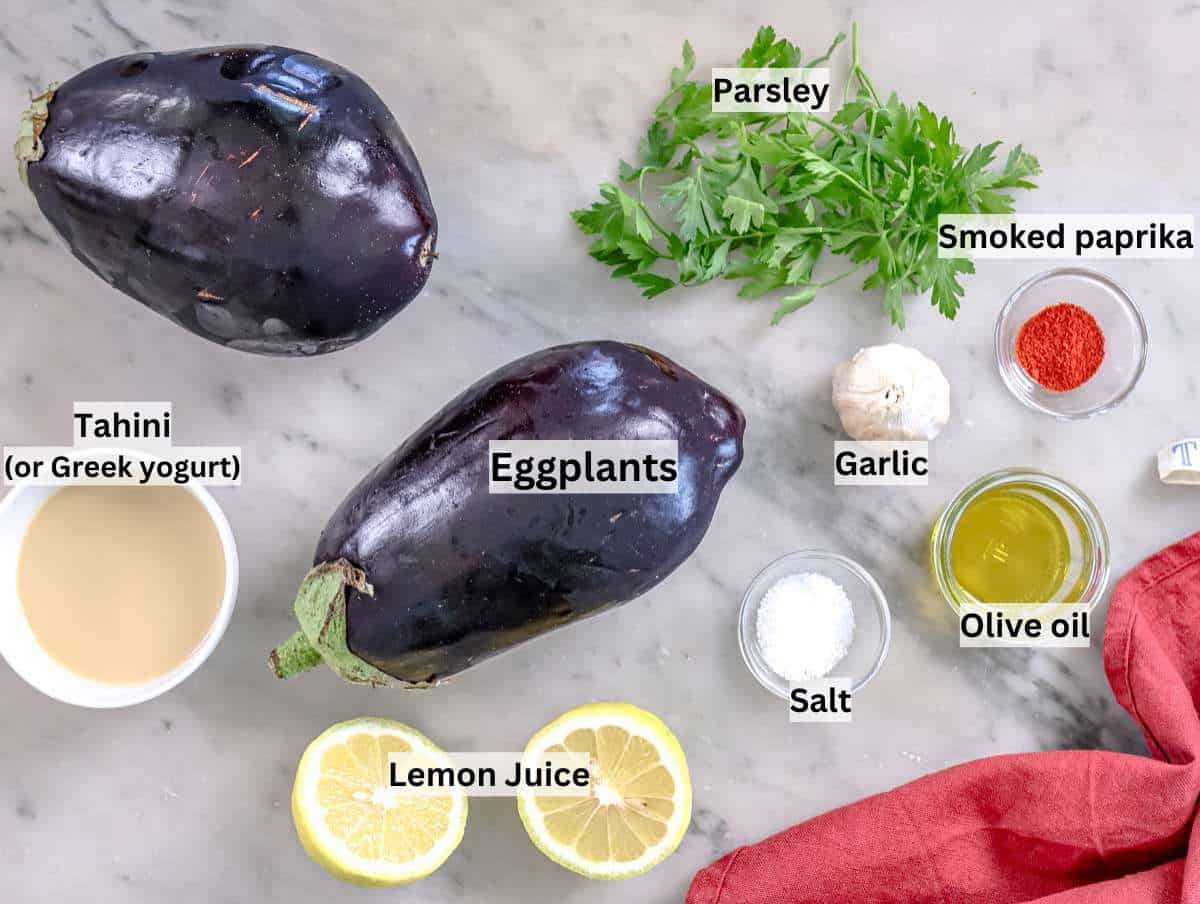
- Eggplant – Use Italian or globe eggplant (aubergine); white or graffiti varieties are slightly sweeter and all are rich in fiber and antioxidants.
- Tahini – Choose smooth, pourable tahini made from 100% hulled sesame seeds; for a lighter option, replace part with white bean puree or unsweetened soy yogurt to reduce fat while keeping it creamy.
- Lemon Juice – Freshly squeezed lemon juice brightens the dip and adds vitamin C to support iron absorption and immune health.
- Garlic – Use one small clove; roast it first for a sweeter, milder flavor that’s gentler on the stomach and easier to digest.
- Salt & Pepper – Sea salt or kosher salt to taste; use sparingly to keep sodium low, and add black pepper if you like a subtle heat.
- Smoked paprika – It adds a pleasant smoky flavor.
- Optional Toppings – Fresh herbs like parsley or mint, olive oil, pine nuts, or pomegranate seeds.
How to make Baba Ganoush
1. Prep the eggplant: Cut 2 medium eggplants in half lengthwise. Score the flesh in a criss-cross pattern using a knife to help them cook evenly and release moisture. Season the cut sides with a light drizzle of olive oil, a pinch of salt, and a twist of black pepper.

2. Bake or Air Fry: Preheat the oven to 430°F / 220°C. Place the eggplants cut side down on a baking tray lined with parchment paper. Roast for 40–50 minutes, until the flesh is very soft and the skin is wrinkled. If using an air fryer, place the eggplants cut side down in the air fryer basket. Cook for 18–22 minutes at 400°F / 200°C, or until fork-tender.

3. Scoop & Blend: Let the eggplants cool for about 10 minutes. Then scoop out the soft flesh with a spoon, discarding the stem and skin.
Transfer the flesh to a food processor. Add tahini, fresh lemon juice, garlic, and salt. Blend until smooth and creamy. Adjust seasoning to taste.

4. Serve: Transfer to a serving bowl and garnish with your favorite toppings: fresh herbs, pomegranate seeds, dukkah, toasted pine nuts, smoked paprika, or a drizzle of olive oil (optional).

How to Char Eggplant on a Gas Stove or Grill?
For the smokiest, most traditional Baba Ganoush, roast the eggplant whole over an open flame. We do this right on our gas stove at home, and the results are unbeatable.
Pierce the eggplant a few times with a fork to allow steam to escape during cooking—this prevents it from bursting.
Place the whole eggplant directly on a gas burner or hot grill. Cook over medium heat, turning it often with metal tongs until the skin is blackened and blistered on all sides and the flesh feels very soft—this takes about 10 to 15 minutes.
Tip: Use a kitchen glove or oven mitt to protect your hand while turning the eggplant.
Let the charred eggplant cool for a few minutes on a plate, then remove the blackened skin by gently scraping it off with a small knife.
Discard the skin and stem, then scoop the soft, smoky flesh into a food processor to make your Baba Ganoush.

Tips
- Score the flesh before roasting – Cutting a criss-cross pattern into the eggplant halves helps them cook evenly, release steam, and makes scooping easier.
- Reduce moisture for creamier texture – Roasting cut-side-down allows water to evaporate naturally; if using whole eggplant, drain the flesh in a colander before blending.
- Roast the garlic for a mellow kick – Roasted garlic adds sweet, nutty flavor and is gentler on digestion than raw garlic.
- Choose quality tahini – Use a smooth, pourable tahini made from 100% hulled sesame seeds for a mild, creamy result without bitterness.
- Balance with fresh lemon juice – Freshly squeezed lemon brightens the dip and cuts through the richness of the tahini; start with a couple of tablespoons and adjust to taste.
- Keep it simple, then adjust – Eggplants vary in flavor, so begin with basic ingredients and tweak seasoning after blending for perfect balance.
- Don’t overblend – Pulse the ingredients just until combined; overblending can make the dip gummy and lose its traditional texture.
- Garnish for texture and color – Finish with fresh herbs, pomegranate seeds, toasted pine nuts, or a sprinkle of paprika to elevate both taste and presentation.
- Serve at room temperature – Let the dip rest outside the fridge for 15–20 minutes before serving to bring out its full flavor.
Frequently Asked Questions
Do I need to peel the eggplant before roasting?
No, keep the skin on during roasting—it helps trap moisture and flavor. Once cooked, you’ll scoop out the soft flesh and discard the skin.
Can I make baba ganoush without tahini?
Why is my eggplant dip watery?
How do I get that smoky flavor at home without a grill?
Can I make it in advance?
How long does it last in the fridge?
Can I freeze it?
Is baba ganoush healthy?
Can I make it without a food processor?
What’s the difference between Baba Ganoush and Mutabal?
More dips & spreads
Baba Ganoush
Baba ganoush is a gorgeous Middle Eastern eggplant dip made with a food processor, roasted eggplant, and a smooth, creamy texture.
Prep Time: 10 minutes mins
Cook Time: 20 minutes mins
Total Time: 30 minutes mins
Servings: 4 people
Course: Dip, Spread
Cuisine: Middle-Eastern
Instructions
- Prep the Eggplant: Cut 2 medium eggplants in half lengthwise and score the flesh. Drizzle with olive oil (optional), and season with a pinch of salt and pepper.

- Oven: Bake cut side down at 430°F / 220°C for 40–50 minutes.Air Fryer: Cook cut side down at 400°F / 200°C for 18–22 minutes, until soft.

- Scoop & Blend: Let cool, then scoop out the flesh and discard skin and stem.Blend in a food processor with ⅓ cup tahini, 2 tablespoons lemon juice, ½ clove garlic, and ½ teaspoon salt until smooth but without over-blending. Taste and adjust seasoning.

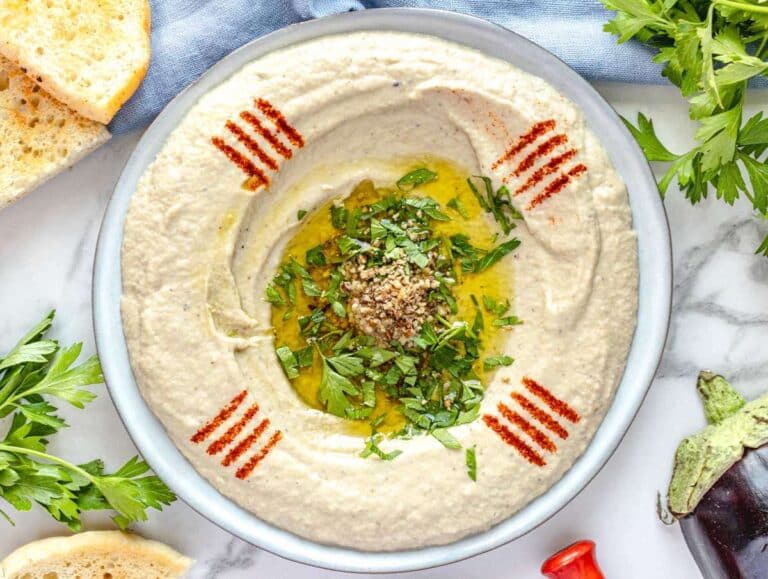
- Serve: Spoon into a bowl and garnish with 1 drizzle extra virgin olive oil, 1 pinch parsley, 1 pinch smoked paprika, and pomegranate seeds or toasted pine nuts.
Notes
SUBSTITUTIONS
- Tahini → Swap part with white bean puree, Greek yogurt, or unsweetened soy yogurt for a lighter, lower-fat dip.
- Lemon Juice → Always use fresh for brightness and a boost of vitamin C.
- Garlic → Raw for a bold kick, or roasted for a milder, easier-to-digest flavor.
- Smoked Paprika → A pinch adds smokiness if you skip the grill.
- Toppings → Try parsley, mint, pine nuts, pomegranate seeds, or a drizzle of olive oil (optional).
TIPS
- Score eggplant flesh for even cooking and easy scooping.
- Roast cut-side down to reduce moisture—no draining needed.
- Roast garlic for a sweeter, gentler flavor.
- Use quality tahini that’s smooth and mild, not bitter.
- Add fresh lemon juice to brighten and balance the dip.
- Start simple and adjust seasoning after blending.
- Pulse, don’t purée—some texture makes it better.
- Garnish before serving for color, crunch, and flavor.
- Serve at room temp to let the flavors shine.
- Nutritious Cinnamon and Aloe Vera Drink to Support Your Health
 In the ongoing search for a healthier lifestyle, more and more people are becoming interested in natural remedies and recipes that promote overall well-being. One ingredient often used in this context is aloe vera, a plant traditionally valued for its soothing properties and potential health benefits. In this article, we’ll introduce a simple and refreshing drink…
 - 15 Signs That Your Liver Is in Danger (And What to Do About It)
 Your liver is one of the most important organs in your body. It filters toxins, supports digestion, and helps regulate metabolism. However, liver problems often develop silently, showing subtle warning signs that are easy to ignore—until it’s too late. In this article, we’ll explore 15 signs that your liver is in danger, so you can take…
 - The Essential Vitamin That May Help Relieve Leg and Bone Pain
 Have you ever experienced unexplained pain in your legs or bones? If so, you may wonder whether a vitamin deficiency could be contributing to the problem. In this article, we’ll explore vitamin D, its importance for bone and muscle health, natural sources, and practical ways to support your overall well-being. The Importance of Vitamins for Bone…
 - Benefits, Properties, and How to Prepare It at Home
 Guava leaf tea has become one of the most popular traditional herbal infusions for people looking for a simple and affordable way to support their overall well-being. Made from the leaves of the guava tree, this traditional drink is known for its antioxidant properties and its traditional use for digestive comfort. Many people drink it as…
 - The Plant Gaining Attention for Supporting Eye Health
 Discover a Natural Way to Care for Your Vision 👁️ Introduction Millions of people around the world experience eye discomfort every day—including blurred vision, light sensitivity, screen-related eye fatigue, dryness, or a constant reliance on glasses. As modern life places increasing demands on our eyes, many people are turning to nature in search of gentle,…
 - The Natural Juice Blend That Is Getting Attention in 2026
 The natural juice blend tipped to be a trend in 2026: Soursop, Guava, and Tomato. In a world where chronic diseases such as diabetes, cancer, and hypertension place increasing pressure on healthcare systems, more people are looking for safe, natural ways to support their health. Although prescribed medications remain essential, interest in complementary approaches based…
 - What Happens to Your Body When You Start Eating Garlic Before Bed?
 Many people struggle to get a good night’s sleep. They may wake up several times during the night or still feel tired even after what seems like enough rest. This fatigue can affect energy, mood, and everyday activities. As a result, more people are exploring natural habits that may support better sleep. But could a…
 - A Gentle Green Ally for Kidney and Joint Health
 If you have ever experienced the persistent discomfort of kidney stones or the sudden pain of gout, you know how much these conditions can interfere with everyday life. Although there is no single solution that works for everyone, nature offers a variety of plants that have been traditionally used to support well-being, and one of…
 - Over 60? You Might Be Missing These 10 Silent Mini Stroke Warning Signs
 Introduction As we age, the risk of stroke increases—especially after 60. But what many people don’t realize is that mini strokes (also called TIAs – transient ischemic attacks) often happen with subtle or “silent” symptoms. Ignoring these early warning signs can be dangerous. A mini stroke is often a serious red flag that a major stroke could occur soon.…
 - A Simple Nighttime Ritual to Improve Deep Sleep Naturally
 Getting quality sleep isn’t a luxury—it’s a necessity. Yet for many people, falling asleep quickly and staying asleep through the night can feel like a constant battle. Instead of turning to medications, more people are exploring gentle, natural solutions that support the body’s own sleep cycle. One surprisingly effective option? A warm banana and cinnamon…
 - Benefits, Recipe, and How to Enjoy This Powerful Herbal Infusion
 Clove tea is a fragrant herbal infusion with a distinctive, warm flavor that has been used for centuries for its medicinal properties. This comforting drink is not only delicious but also packed with health benefits. In this article, you’ll learn what clove tea is, how to prepare it, its health benefits, and creative ways to…
 - Healthy Juice for Eye Health and Memory: Supports Cataract, Glaucoma, Migraine, and Memory Issues
 🥤 Natural Juice for Vision and Brain Health Introduction Do you struggle with blurred vision, cataracts, glaucoma, migraines, or memory problems? These conditions often develop with age or due to unhealthy lifestyle habits. Fortunately, nature offers a simple and effective solution: a nutrient-rich natural juice packed with essential vitamins and antioxidants. This powerful recipe combines orange,…
 - The Living Amulet That “Prays” for Abundance
 Did you know there’s a plant that moves as if it had a will of its own? It’s not science fiction—it’sMaranta leuconeura, commonly known as thePrayer Plant. Beyond being a stunning decorative piece, this tropical beauty is believed to bring luck, gratitude, and prosperity into your home. Its unique behavior and symbolic meaning have made it a…
 - A Natural Remedy Gaining Attention After 40
 in today’s digital world, eye strain, dryness, and blurred vision have become everyday struggles—especially for adults over 40. Long hours on screens, environmental stressors, and natural aging all contribute to declining eye comfort and clarity. But what if relief didn’t always have to come from expensive drops or supplements? A humble plant known as Euphorbia hirta is…
 - A Natural Ally for Blood Sugar Control
 In this article, we’ll explore how guava leaves may support blood sugar control and how to prepare them properly to maximize their benefits. 🌱 Medicinal Properties of Guava Leaves Guava leaves are rich in beneficial compounds such as flavonoids, polyphenols, and carotenoids, which give them several important properties: These compounds help improve overall health and may…